What is colour drenching?
The renovating.co.uk team · Prices checked 25 Sep 2026
Colour drenching is painting the ceiling, skirting boards, door and window frames the same colour as the walls, so the room loses the edges where your eye would normally stop. In a small bedroom that usually reads as bigger, even in a deep colour, and all it takes is paint.
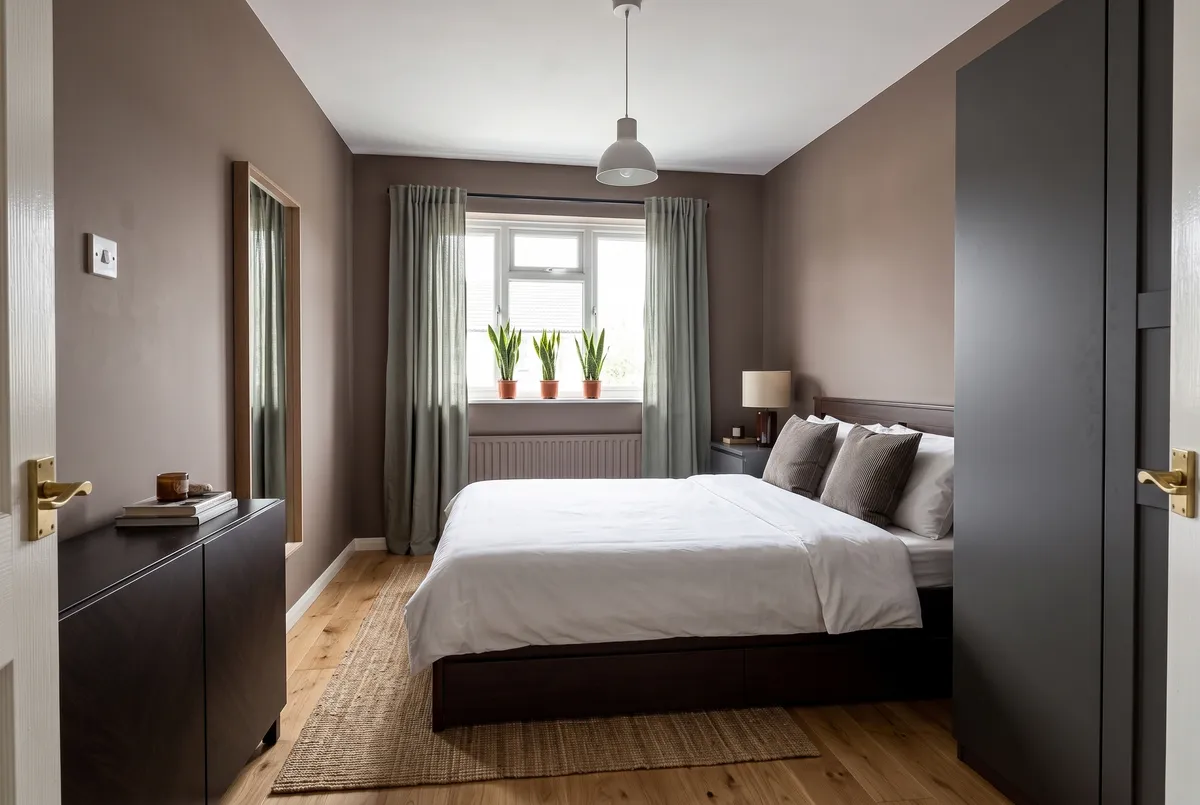
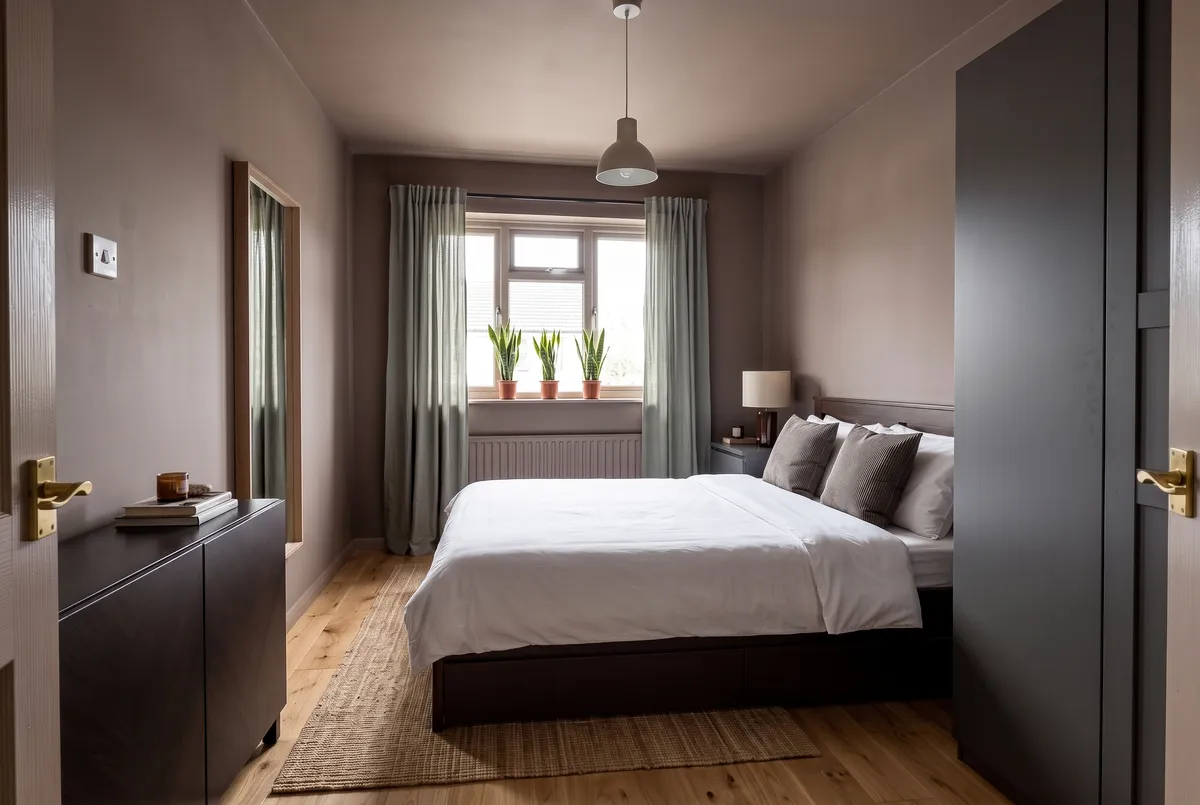 walls onlydrenched
‹›
We tried it on a bedroom we designed with real IKEA and B&Q products, so you can see the same room twice rather than take our word for it.
What does colour drenching look like in a room?
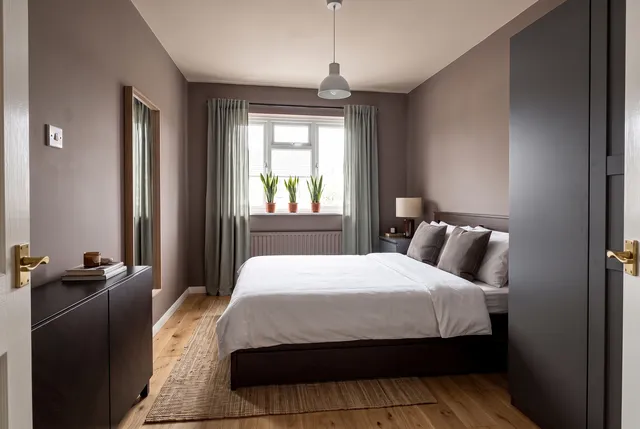
This is a Japandi double bedroom we designed, roughly 3.2 x 4.2m. The walls are Dulux Heritage Mid Umber in a velvet matt finish (B&Q, £49 for 2.5L), a warm taupe. The bed is an IKEA IDANÄS in dark brown (£499), there's a jute LOHALS rug at 200 x 300cm (£179), grey-green DYTÅG curtains (£69) and a plain white pendant from B&Q (£15). The whole room comes to £1,626 for 13 products.
In the first picture only the walls are coloured. The ceiling, skirting boards, door and window frames are white, which is how most UK bedrooms are painted.
It looks tidy, and it also looks like a box. The white ceiling sits on top like a lid, the white skirting runs a line round the bottom, and you read the room as a taupe rectangle with a white border.
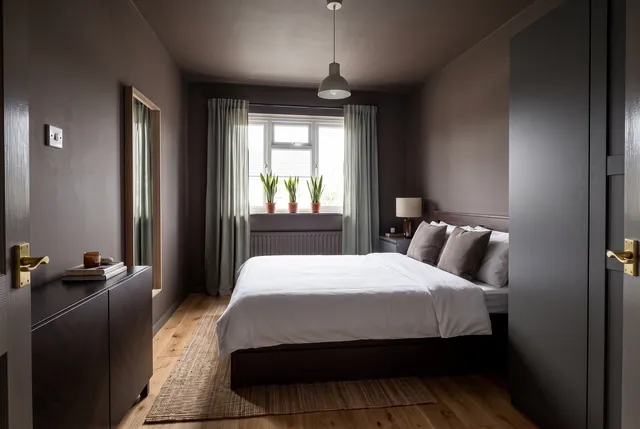
In the second picture the ceiling, skirting boards, door, door frame and window frames are painted the same colour as the walls, in the same finish.
The corners where the walls meet the ceiling soften, and the door stops being a white slab. The room feels like one space rather than six separate surfaces. It's also a bit darker overall, which is the trade-off.
What exactly is colour drenching?
One colour goes across every surface: walls, ceiling, woodwork, and often the radiator. Hammonds describes a looser version, picking one colour and spreading its tones and shades over as many surfaces as possible, and Dulux says slight variations between surfaces can enhance the effect. We'd say the ceiling is the part that makes it work. Starry Homestead says a white ceiling "will break the continuous feel", which matches what you can see in the first picture.
It isn't the same as painting a feature wall, and it isn't the same as a dark room. You can drench in a pale colour, and plenty of people do.
Does colour drenching make a small room look bigger?
Often, yes. Dulux says it removes the visual interruptions, and that painted skirting boards blend into the walls so the eye isn't stopped by a contrasting line. The two pictures show the same thing.
The sources split on one point: how dark to go. Starry Homestead warns against very dark shades in small rooms without much natural light, because they can feel cramped or cave-like, while Dulux says that in a room with plenty of natural light, dark colours can feel surprisingly airy. This bedroom has one window, and a mid-tone suits that. In most small rooms we'd go for a mid-tone like this one, and save the very deep shades for rooms you're happy to make moody. We cover that in our guide to whether dark colours make a room look smaller.
Which colour should you drench a bedroom in?
A mid-tone with some warmth in it, in most bedrooms. Starry Homestead suggests softer hues such as beiges, blush and warm greys for bedrooms, and keeps saturated navies and greens for rooms that act as a focus. Victoria Linen points to greige, taupe, clay and mocha.
Mid Umber is in that family, and it's a big part of why the drenched picture works: the white bedding, the oak floor and the dark furniture all stand out against it without a hard edge. Buy a sample pot first, because a colour looks different on your wall at 8am and at 8pm, and a ceiling gets less light than a wall.
Can you colour drench a living room?
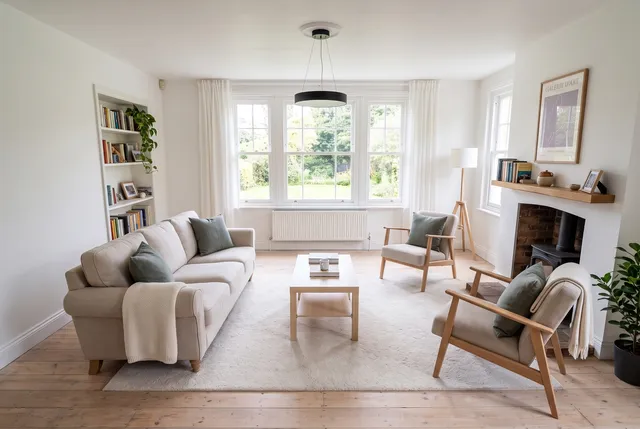
Yes, with the same logic and a bit more planning, because a living room has more furniture and more light sources. Hammonds suggests muted tonal shades over bright ones, testing swatches first, and layering lamps rather than relying on one ceiling light. We'd add that a sofa in a similar tone to the walls will disappear, so go a shade or two lighter or darker, or choose a contrasting texture.
Should the finish be the same on every surface?
The room in the pictures has the same finish everywhere, which is the cleanest way to show the idea. In your own room it's fine to vary it. Dulux suggests a matt finish on the walls with eggshell on the ceiling, and Starry Homestead suggests matt walls with satin or eggshell on the trim and doors. We'd go for matt on the walls and ceiling and eggshell on the woodwork, because skirting boards and doors get scuffed and eggshell wipes clean more easily.
Check the colour comes in the finish you want for the woodwork before you fall for it. Not every shade is made in every finish, and a paint counter can colour-match if yours isn't.
What does it cost, and what's the alternative?
The paint in this room is one 2.5L tin of Mid Umber at £49, which is the walls-only version. Drenching adds the ceiling, skirting boards, door and frames to the area you're covering, so you'll need more paint: each extra 2.5L tin is £49, and the tin states how many square metres it covers, so measure up and do the sum.
The alternative is a different colour at the same price. B&Q sells other Dulux Heritage shades, from Dark Stone to Wild Blackberry to Deep Ultramarine, at £49 for 2.5L as well, so going deeper doesn't cost more per tin. It may take more coats, and a ceiling is slow to paint with a roller overhead, so allow time as well as money.
Compared with the £1,626 for the whole room, the extra paint is a small part of the cost. Against swapping furniture, it's the cheapest thing in the room that changes how it feels.
How do you check it at home before you commit?
- Paint two sample patches, one on a wall and one on the ceiling, and look at them at different times of day.
- Hold a white sheet of paper against the skirting board and the door frame, and imagine that white gone. That's the line you're removing.
- Check the light. If the room has one small window, go a step lighter than the shade you love in the shop.
- Count what you'll paint: walls, ceiling, skirting boards, door, door and window frames, and the radiator if you want it to disappear.
- Pick warm bulbs, around 2700K to 3000K, which one design site recommends because cool white makes deep paint look cold.
If you can't decide, drench the ceiling and walls first and leave the woodwork for a second weekend. You'll get most of the effect.
Do the window frames need painting too?
Not if they're white uPVC, which we wouldn't paint without advice from the paint manufacturer. Leaving them white is a fair compromise, and most of the effect comes from the ceiling and the skirting boards.
FAQ
What is colour drenching?
Painting the walls, ceiling, skirting boards and often doors and frames the same colour, so the room reads as one block of colour with no contrasting edges.
Does colour drenching make a room look bigger?
In many small rooms, yes, because there's no white ceiling or skirting line for the eye to stop at. Very dark shades in a room with little daylight are the exception.
Can you colour drench a bedroom?
Yes. A mid-tone such as a warm taupe is a safe start, and a bedroom is a good place to try it because the room is small and has little furniture on the walls.
Should the ceiling be the same colour as the walls?
For a drenched look, yes. A white ceiling breaks the continuous feel, so it's the one surface to prioritise.